FACE PROCEDURES

Ear Keloid Removal in Vancouver

Ear keloids can be challenging to treat because they have a tendency to recur. Treatment may include corticosteroid injections, surgical removal, pressure therapy, or a combination of treatments depending on the size and location of the keloid, previous treatment and the surrounding ear tissue.

If surgery is being considered, the goal is not simply to remove the keloid. I also consider how the wound will be closed, where the resulting scar will sit, how much normal tissue is available, and how we can best preserve the shape of the ear.

Procedure Overview

Treatment settingSteroid injections are performed in clinic; surgical ear keloid removal is performed under local anesthetic.
SuturesNon-absorbable sutures on the front of the ear are generally removed at approximately 7 days; dissolvable sutures may be used on the back of the earlobe and dissolve after 2-4 weeks. 
ExerciseKeep activity light for approximately 1-2 weeks. Heavier exercise is resumed according to wound healing and after suture removal.
Scar managementPostoperative corticosteroid injections, scar massage, silicone tape or gel, and pressure therapy are used as part of scar management. A custom pressure cuff may be measured 1-2 weeks after surgery and worn for several months when indicated.
Follow-upThe first postoperative steroid injection is typically given at about 2 weeks, then approximately every 6 weeks with frequency adjusted to the scar. Ongoing injections and monitoring may continue for at least 1-2 years.
RecurrenceEar keloids can recur even after surgery, so postoperative treatment and follow-up are important.

What Are Ear Keloids?

Keloids are overgrowths of scar tissue that develop after an injury to the skin. On the ear, they are common after piercing and can form on the earlobe or the cartilage portion of the ear. Unlike a typical scar, a keloid grows beyond the boundaries of the original wound and may continue to enlarge after the piercing has healed.

Ear keloids vary considerably in size and shape and may involve the front, back or both sides of the ear. Some develop after a piercing that was repeatedly irritated, inflamed or infected. Keloids can be challenging to treat because they have a tendency to recur, and treatment may include corticosteroid injections, surgical removal, pressure therapy, or a combination of treatments.

Not every bump after an ear piercing is a keloid. If your piercing has remained sore, crusty, irritated or slow to heal, learn more about ear piercing bumps and keloids, including why some piercings do not heal normally.

What Are the Treatment Options for Ear Keloids?

There is no single treatment that is appropriate for every ear keloid. The treatment plan depends on the keloid itself, previous treatment and the anatomy of the ear. In some patients, corticosteroid injections may be used first. If there has been minimal response to injections, surgical excision followed by postoperative treatment may be considered.

Corticosteroid Injections

The most common nonsurgical treatment I use is an intralesional corticosteroid injection, where medication is injected directly into the keloid scar. The injections can help shrink the keloid, soften the scar and relieve symptoms such as itchiness and discomfort.  More than one treatment is usually required. Before surgery, injections are commonly repeated every four to six weeks until the keloid improves.  

When Might Surgical Ear Keloid Removal Be Considered?

Not every ear keloid needs to be surgically removed.

Surgery may be considered when a keloid has had minimal improvement with nonsurgical treatment or when its size, location or effect on the shape of the ear makes surgical treatment reasonable. You do not need to determine which treatment you need before consultation. I can assess the keloid and discuss whether injections, surgical removal, or a combination of treatments may be appropriate.

How Is Ear Keloid Removal Performed?

Ear keloid removal is performed under local anesthetic. You may feel some movement or light pressure while the procedure is being performed, but the area should be numb during surgery.

The surgical approach depends on the location and size of the keloid and the amount of normal tissue available. In some cases, the entire keloid can be removed. In others, removing all of the scar tissue may create unnecessary tension or distortion of the ear, and a different approach may be more appropriate.

Extralesional Excision

When there is enough surrounding tissue to close the wound appropriately, it may be possible to remove the entire keloid around its outer border. This is called an extralesional excision.

Intralesional Excision

If removing the entire keloid would leave insufficient skin for closure or create excessive tension, the firm central portion of the keloid can instead be “cored out.” This is called an intralesional excision.

The remaining keloid skin can then be used as skin flaps to close the wound.

When Might a Staged Procedure Be Needed?

Most ear keloids can be treated in a single procedure. However, very large keloids or those that significantly involve the surrounding skin may require treatment in stages.

If removing the entire keloid at once would not leave enough healthy skin for closure, an intralesional excision may be used so that some of the overlying keloid skin can be preserved and used as a flap. Once the ear has healed, any remaining keloid tissue can be reassessed and additional treatment planned if needed.

Preserving the Shape of the Ear

The amount of normal skin available matters when planning ear keloid removal. Removing too much tissue can make closure difficult or place unnecessary tension on the wound.

For that reason, the goal is not simply maximal removal of scar tissue. I also consider how the remaining tissue can be used for closure and how the procedure may affect the contour of the earlobe or ear.

Sutures and Dressing

The incisions are closed with sutures. Depending on the location and closure, removable sutures are generally removed at approximately 7 to 10 days, while dissolvable sutures may take 2 to 4 weeks to dissolve.

A dressing may be placed after surgery and wound-care instructions are provided.

Can an Ear Keloid Come Back After Removal?

Yes. Keloids can recur after surgical removal.

This is one of the most important things to understand before surgery. Removing a keloid does not remove the underlying tendency for that individual to form keloid scar tissue.

For this reason, treatment does not end when the keloid is excised. Corticosteroid injections and pressure therapy are recommended after surgery to help manage the new scar and reduce the risk of recurrence. Even with appropriate treatment, recurrence is still possible.

What Is Recovery Like After Ear Keloid Removal?

The incision usually heals over the first few weeks, but keloid treatment often continues beyond initial wound healing. Scar management and follow-up are important because the new scar can continue to change over time.

The First Few Days

The incision should be kept dry for approximately 48 hours. Polysporin or Vaseline is applied to clean, dry incisions twice daily.

Swelling, bruising and a small amount of bleeding can occur after surgery. Ice may help with swelling, and Tylenol or Advil can be taken for discomfort when appropriate. I also recommend sleeping on a towel for the first few nights in case there is minor bleeding.

Light activities are recommended for approximately 1 to 2 weeks.

After the Sutures Are Removed

The incision may still be red and mildly swollen when the sutures are removed. Both gradually improve with time.

Once the incision has healed sufficiently, scar massage and silicone scar tape or gel can be incorporated into scar care.

Steroid Injections After Surgery

For most surgical patients, corticosteroid injections are an important part of postoperative treatment.

I typically begin injections at approximately two weeks after surgery and then repeat them at approximately six-week intervals, adjusting the frequency according to how the scar is behaving.

Because keloids can recur over time, injections and monitoring may continue for one to two years in some patients.

Scar Massage and Silicone Scar Therapy

Scar massage and silicone scar tape or gel are used once the incision has healed sufficiently and form part of the overall scar-management plan.

Pressure Therapy

Pressure therapy is also an important part of treatment for many patients.

For earlobe keloids, a pressure earring or cuff may be appropriate. When a custom device is required, I refer patients for an Earpress pressure device. The cuff is typically measured and made at a separate therapist appointment approximately one to two weeks after surgery.

Pressure therapy may be required for many months, depending on how the scar is healing.

What Are the Risks of Ear Keloid Removal?

The most important risk specific to keloid surgery is recurrence. Surgery also creates a new scar, and that scar may itself become raised or develop another keloid. Other surgical risks can include infection, delayed healing and changes to the shape of the ear, depending on the location and extent of the procedure. Larger keloids may require more extensive removal and can affect the amount of normal tissue available to reconstruct the earlobe or preserve the original ear contour.

How Much Does Ear Keloid Removal Cost in Vancouver?

Ear keloid surgery currently starts at $900. Final surgical pricing depends on the size and number of keloids, whether one or both ears are treated, whether the keloid involves the front and back of the ear, and whether treatment needs to be staged. Final pricing is confirmed once the treatment plan is known.

Ear keloid removal is generally considered cosmetic and is not an MSP benefit. Corticosteroid injections are billed differently: the clinic fee is $150 for the injection plus $15 for the steroid medication. For eligible BC patients with MSP and a family physician, the $150 professional injection fee may be covered by MSP; the $15 medication cost remains patient-paid. Coverage should be confirmed with the clinic before treatment.

A custom Earpress pressure cuff, when required, is measured and made at a separate therapist appointment and is charged separately from the surgery.

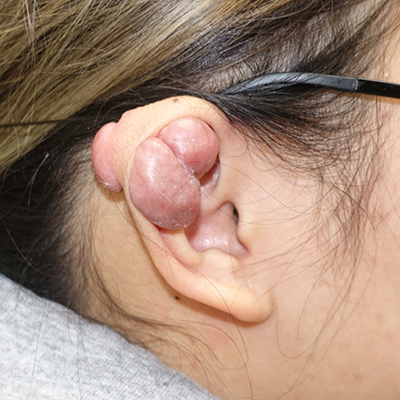
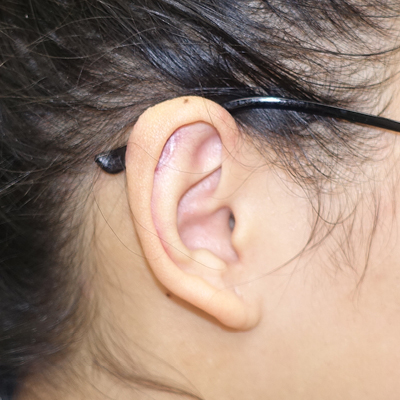
Ear Keloid Before and After Photos

Ear keloids can vary considerably in size, location and the amount of normal ear tissue involved. For that reason, the surgical approach and resulting scar will not be identical from one patient to another.

You can view examples of patients treated for ear keloids in my Ear Keloid Before & After Gallery.

Ear Keloid Removal FAQs

Yes. Some ear keloids can be treated with corticosteroid injections without surgery. Another treatment option is freezing the keloid cells with liquid nitrogen, called cryotherapy. Whether this is appropriate depends on the size and characteristics of the keloid, previous treatment and the patient’s goals.

Surgery may be considered when a keloid has had minimal response to nonsurgical treatment or when its size and anatomy make surgical treatment reasonable. The decision is individualized after assessing the keloid and surrounding ear tissue.

Yes. Recurrence is possible even after surgical removal. This is why postoperative scar management, including corticosteroid injections and pressure therapy, is an important part of treatment.

Generally, yes. We recommend follow-up at approximately three months so that Dr. Ho can assess how the ear has healed and whether re-piercing is appropriate. We can also advise on the safest location for a new piercing. If you do proceed with another piercing, we recommend a needle piercing rather than a piercing gun, as it allows for more precise placement and causes less blunt trauma to the tissue.

Yes. Removing a keloid requires an incision and therefore creates a new scar. Part of surgical planning is determining where that scar will be and how the ear can be closed while preserving its contour.

Corticosteroid injections can help suppress excessive scar formation and reduce the risk of the keloid recurring after surgery. We typically begin injections about two weeks after the procedure, then repeat them about every six weeks. The frequency is adjusted according to how the scar is healing, and maintenance injections and monitoring may continue for at least one to two years.

Consultation for Ear Keloid Removal in Vancouver

If you have developed a keloid after an ear piercing or another injury, you do not need to determine the treatment yourself before consultation. I will assess the size and location of the keloid, whether it involves the front, back or both surfaces of the ear, the surrounding ear tissue, previous treatments and any history of recurrence. From there, we can discuss whether corticosteroid injections, surgical removal, or a combination of treatments may be appropriate.

Because keloids have a high risk of recurrence, reliable follow-up is an important part of treatment. If you live far from Vancouver and cannot return for timely steroid injections and scar monitoring, I may recommend pursuing treatment with a plastic surgeon closer to home so that maintenance treatment can be provided consistently.

Dr. Adelyn Ho is a Royal College-certified plastic surgeon practising in Vancouver, British Columbia.

Medically reviewed by Dr. Adelyn Ho, MD, MPH, FRCSC | Plastic and Reconstructive Surgeon | Last reviewed: August 2026