
Most ear piercings heal without much difficulty. There may be some initial swelling or tenderness, but over time the piercing settles and becomes comfortable.
That is not always the history I hear from patients who eventually develop an ear keloid.
Many describe a piercing that never seemed to heal normally. It may have remained sore for months, repeatedly become crusty or irritated, occasionally drained, or seemed to improve and then flare again. Some patients notice that the piercing is particularly uncomfortable after sleeping on that side and wake up with the ear feeling sore or inflamed.
Not every bump around a piercing is a keloid. Understanding how the piercing healed, and how the bump has changed over time, can help determine what may be happening.
What Happens When an Ear Piercing Heals?
An ear piercing creates a small wound through the skin. Normally, the body repairs that wound by producing collagen and forming a small amount of scar tissue around the piercing channel.
In most people, that healing response gradually settles.
In some people, however, the wound-healing response becomes overactive and the body continues to produce more scar tissue than is needed. At a cellular level, there is increased collagen production and reduced collagen breakdown, which can lead to an excessive raised scar.
Depending on how that scar behaves, it may develop into a hypertrophic scar or a keloid.
What Is the Difference Between a Hypertrophic Scar and a Keloid?
Both hypertrophic scars and keloids are raised scars, but they behave differently.
A hypertrophic scar remains within the boundaries of the original piercing or wound.
A keloid grows beyond those original boundaries and may continue to enlarge even after the original piercing has healed.
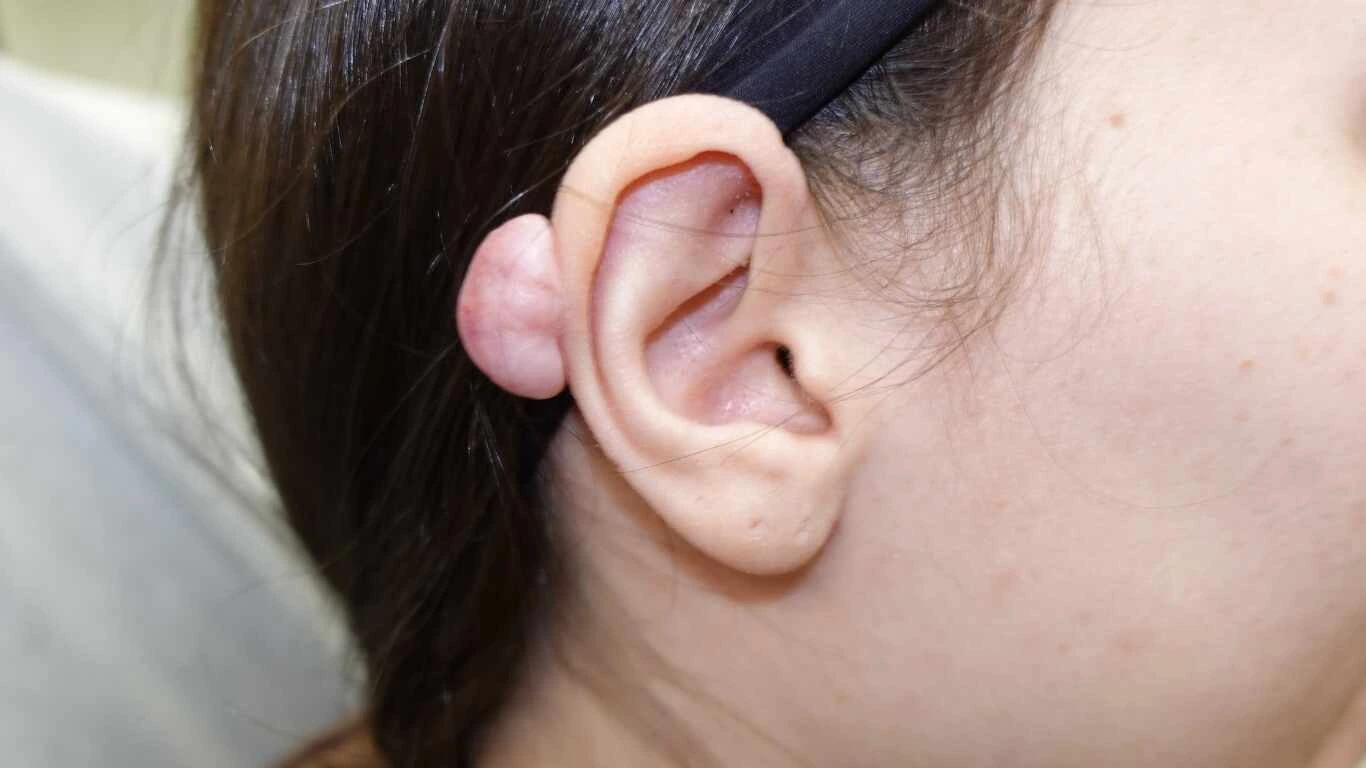
On the ear, a keloid can appear as a small bump beside the piercing or develop into a much larger mass. It may involve the earlobe or the cartilage portion of the ear and can develop on the front, back or both sides of the piercing.
Why Do Some Ear Piercings Never Seem to Heal Properly?
One pattern I commonly hear from patients with ear keloids is that the original piercing never really settled.
They may describe repeated soreness, crusting, drainage or inflammation. Some notice that symptoms are worse on the side they sleep on. The piercing may become tender again after pressure has been placed on the ear overnight.
My clinical impression is that repeated pressure and irritation may create ongoing microtrauma around a piercing that is already having difficulty healing. Instead of allowing the wound to settle completely, repeated irritation may contribute to continued inflammation and abnormal scar formation in someone who is prone to developing a keloid.
This does not mean that sleeping on an ear piercing causes a keloid. Many people have irritated or slow-healing piercings and never develop one. But when I assess an ear keloid, the history of how the original piercing healed can be very helpful.
I often ask not only when the ear was pierced, but whether it remained sore, repeatedly became crusty or inflamed, drained, or was frequently irritated before the keloid began to grow.
Can Inflammation or Infection Contribute to Keloid Formation?
Some patients first notice their keloid after an episode of inflammation or infection around the piercing site.
Inflammation activates the body’s wound-healing response. If inflammation or irritation persists, the area may continue trying to repair itself rather than progressing through normal healing.
In someone who already has a tendency toward excessive scar formation, this prolonged wound-healing response may contribute to the development of a hypertrophic scar or keloid.
An actively infected or draining piercing is a different problem and should be assessed before elective scar treatment is considered.
What Does an Ear Keloid Look Like?
Ear keloids vary considerably in shape and size.
Some begin as a small, firm bump immediately beside a piercing. Others continue to enlarge and become substantially larger than the original piercing site.
Depending on the location and pattern of growth, keloid tissue may develop on both the front and back of the ear.
A clue that a bump may be a keloid is that the scar continues growing beyond the original boundaries of the piercing rather than gradually flattening or settling with time.
Will Removing the Earring Make the Keloid Go Away?
Not necessarily.
If a bump is primarily related to irritation, changing or removing the jewellery may sometimes allow the area to settle.
Once a true keloid has developed, however, simply removing the earring does not usually make the scar disappear. Some patients actually notice the keloid more clearly after removing the piercing.
This is why it is helpful to determine what type of bump or scar is present before deciding what to do.
Can Anyone Develop an Ear Keloid?
Ear keloids can occur in people of different racial and ethnic backgrounds, although some people are more prone to keloid formation than others.
A previous personal history of keloids can also be useful information when evaluating a new scar.
Regardless of skin type, not every irritated piercing becomes a keloid. The way the scar behaves over time is important.
When Should an Ear Piercing Bump Be Assessed?
Consider having the area assessed if the bump continues to enlarge, remains persistently painful or irritated, repeatedly drains or becomes inflamed, or if scar tissue begins extending beyond the original piercing site.
Assessment can also be helpful if you have had a previous keloid or simply are not sure whether the bump represents normal piercing healing, irritation, a hypertrophic scar or a keloid.
How Are Ear Keloids Treated?
There are both nonsurgical and surgical treatment options for ear keloids, and their effectiveness can vary.
Corticosteroid injections are one of the most common nonsurgical treatments. The medication is injected directly into the keloid and can help soften and shrink the scar.
Larger, persistent or recurrent keloids may require surgical removal. Because keloids have a tendency to recur, treatment often does not end with surgery. Postoperative corticosteroid injections, pressure therapy and ongoing scar monitoring can also be important.
The treatment plan depends on the size and location of the keloid, previous treatment, how much normal ear tissue surrounds it and whether the scar has returned before.
You can learn more about ear keloid removal in Vancouver, including corticosteroid injections, surgical excision, recurrence, recovery and pressure therapy.
Written and medically reviewed by Dr. Adelyn Ho, MD, MPH, FRCSC
Plastic and Reconstructive Surgeon
Last reviewed: August 2026
