
A mini abdominoplasty, often called a mini tummy tuck, is designed for selected patients whose main concern is the lower abdomen below the belly button. It can remove a limited amount of loose lower-abdominal skin and fat and, when appropriate, tighten the lower abdominal wall. The key is patient selection. A mini tummy tuck does not treat significant loose skin or fullness above the belly button in the same way as a full abdominoplasty. During your consultation, Dr. Ho will assess your upper and lower abdomen, abdominal wall, scars, fat distribution, health, and goals to determine whether a mini procedure is likely to give you the result you are looking for.
BODY PROCEDURES
Mini Abdominoplasty (Mini Tummy Tuck) in Vancouver
What Is a Mini Tummy Tuck?
Mini abdominoplasty is a more focused form of abdominal contouring than a full tummy tuck. The surgery is limited to the lower abdomen. Through a low horizontal incision, excess lower-abdominal skin and fat can be removed, and the lower abdominal muscles can be tightened with sutures when needed. The belly button usually does not require an incision around it. However, because the lower abdominal skin is pulled downward during surgery, the belly button may sit slightly lower afterward. For this reason, a mini tummy tuck may not be the best option if your belly button already sits relatively low.
Who May Benefit from a Mini Tummy Tuck?
A mini tummy tuck is most useful when the concern is limited to the lower abdomen, such as a small lower-abdominal pouch or loose skin below the belly button, while the upper abdomen still has relatively good skin tone and contour. Good candidates are generally healthy, at a stable weight, able to stop nicotine before and after surgery, and understand that the procedure treats a limited area and still leaves a scar. If loose skin, fullness, or abdominal-wall laxity extends significantly above the belly button, a full abdominoplasty may provide a more complete correction. The goal is to choose the procedure that best matches your anatomy rather than simply choosing the smaller operation.
Mini Tummy Tuck vs Full Tummy Tuck
| Mini tummy tuck | Full tummy tuck |
|---|---|
| Treats selected concerns mainly below the belly button. | Treats loose skin and abdominal-wall concerns above and below the belly button. |
| Usually uses a low horizontal incision that might be shorter in length than full tummy tuck scar. | Usually requires a longer lower-abdominal (hip-to-hip) incision |
| The belly button is pulled down slightly and does not require an incision around the belly button. | An incision is made around the belly button so the skin of the abdomen can be tightened and repositioned. |
| Can tighten the lower abdominal wall from the belly button to the pubic area. | Can tighten the abdominal wall from the above and below the bellow button. |
| May be combined with liposuction. | May also be combined with liposuction when appropriate. |
The best option is not determined by which procedure is smaller. It is determined by where your loose skin, fat, and muscle laxity are located.
How Mini Abdominoplasty Is Performed
Mini abdominoplasty is performed at a hospital or private surgical facility. Before surgery, Dr. Ho plans the low abdominal incision based on the amount of excess tissue and where the scar can be best concealed under underwear or swimwear. Through the lower abdominal incision, the skin and fat are carefully lifted from the abdominal wall up toward the level of the belly button. If the lower abdominal muscles are stretched or separated, they can be tightened with sutures.
The lower abdominal skin is then drawn downward and the excess skin and fat are removed. Dr. Ho uses progressive tension sutures, which are internal sutures placed between the abdominal tissue and the abdominal wall. These help support the tissues as they heal and reduce the space where fluid can collect.
The belly button remains attached and usually does not have a surrounding incision. It may shift slightly lower as the lower abdominal skin is tightened. The amount of downward pull of the belly button is what limits the amount of skin/fat removal.
Temporary drains may be used depending on the surgical plan. If drains are placed, Dr. Ho and her team provide detailed instructions for caring for them and remove them during early follow-up when appropriate.
Lower Abdominal Muscle Tightening
Pregnancy and weight changes can stretch the abdominal wall. In a mini abdominoplasty, Dr. Ho can tighten the lower abdominal muscles A mini tummy tuck does not provide the same access to the upper abdomen as a full abdominoplasty. If muscle separation extends more broadly, Dr. Ho may recommend a full abdominoplasty procedure instead.
Mini Abdominoplasty with Liposuction
Liposuction may be added when localized fat around the abdomen, waist, or flanks also contributes to the contour. Liposuction and mini abdominoplasty do different jobs: liposuction reduces selected fat deposits, while mini abdominoplasty removes limited loose skin and can tighten the lower abdominal wall. Liposuction does not correct significant loose skin above the belly button, so it cannot make a mini procedure appropriate when the underlying problem requires a full abdominoplasty.
Mini Tummy Tuck Scar and Belly Button
A mini tummy tuck leaves a permanent horizontal scar across the lower abdomen. The scar is generally shorter than a full abdominoplasty scar, but its exact length depends on how much skin needs to be removed. Dr. Ho places the incision as low as possible so that it can usually be covered by underwear or many swimsuit bottoms. There is generally no scar around the belly button because the belly button is not released through a separate circumferential incision. The scar changes over time. It is usually more noticeable early in healing and gradually matures over the following months. Dr. Ho may recommend silicone tape or gel and scar massage as the incision heals.
Mini Tummy Tuck Recovery
Recovery is gradual. During the first days after surgery, swelling, bruising, tightness, soreness, fatigue, and temporary numbness can occur. Gentle walking begins early, while lifting and strenuous exercise are restricted to protect the abdominal wall and incision. As a general guide, the early recovery period is about 2–3 weeks. Many patients plan 3–4 weeks before returning to work or major social commitments, depending on the physical demands of their job and whether other procedures were performed. By around 6 weeks, most patients can return to most activities.
An abdominal binder or compression garment is worn under clothing during the early recovery period to provide support and help manage swelling. When drains are used, they are removed during follow-up based on healing and drain output. We recommend abdominal binder or equivalent for approximately 6-8 weeks. Swelling continues to improve over the following weeks and months. The incision also continues to mature over the first year.
Risks and Limitations
Mini abdominoplasty is less extensive than a full tummy tuck, but it is still surgery. Potential risks include bleeding, infection, delayed wound healing, fluid collections, scarring, numbness or altered sensation, contour irregularity or asymmetry, persistent discomfort, blood clots, anesthesia-related complications, and the possibility of revision. In our experience, the most important limitation is that a mini procedure does not adequately treat significant loose skin or abdominal-wall laxity above the belly button. If a full abdominoplasty is actually needed, choosing a mini procedure may leave some upper-abdominal concerns untreated and can affect how satisfied you are with the final result.
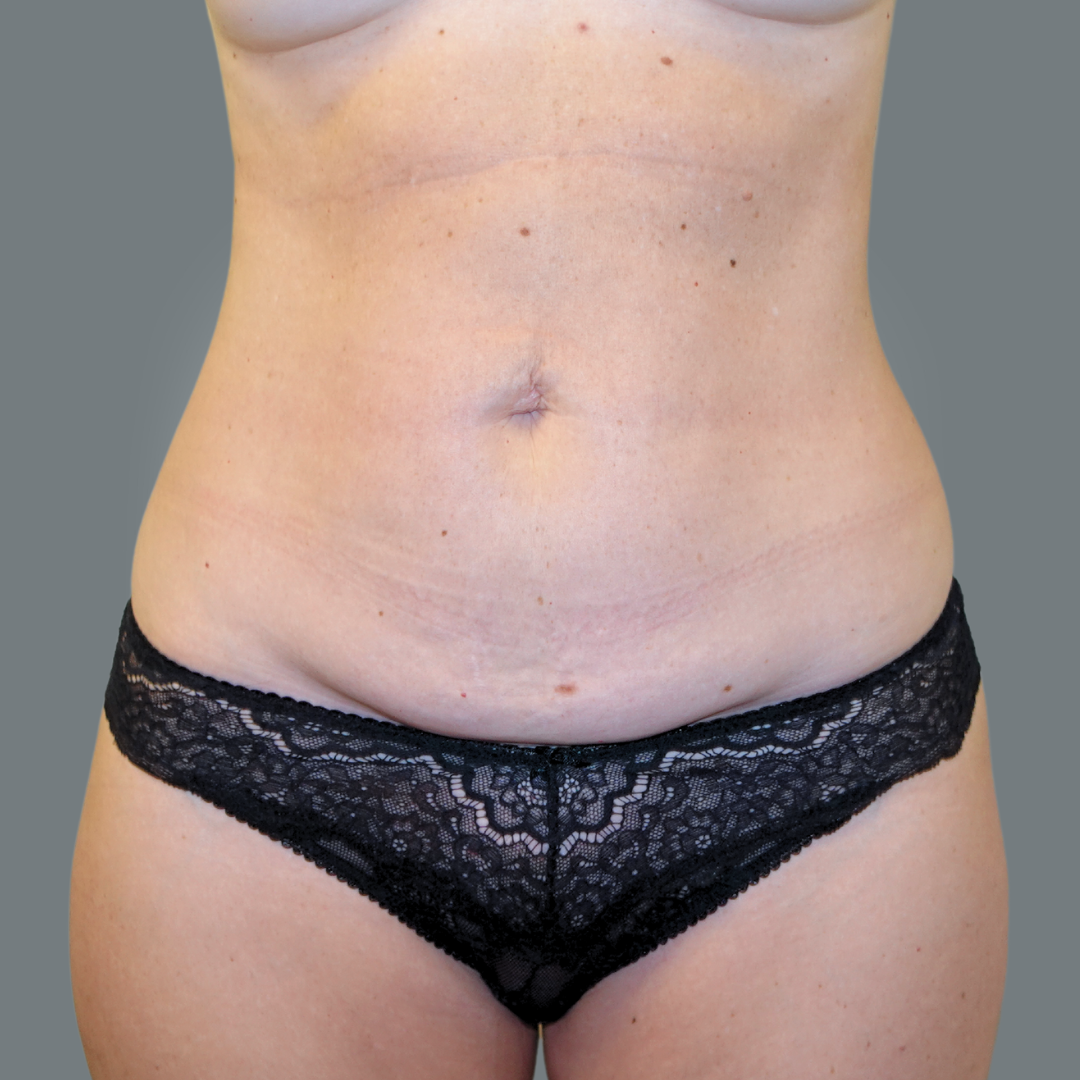
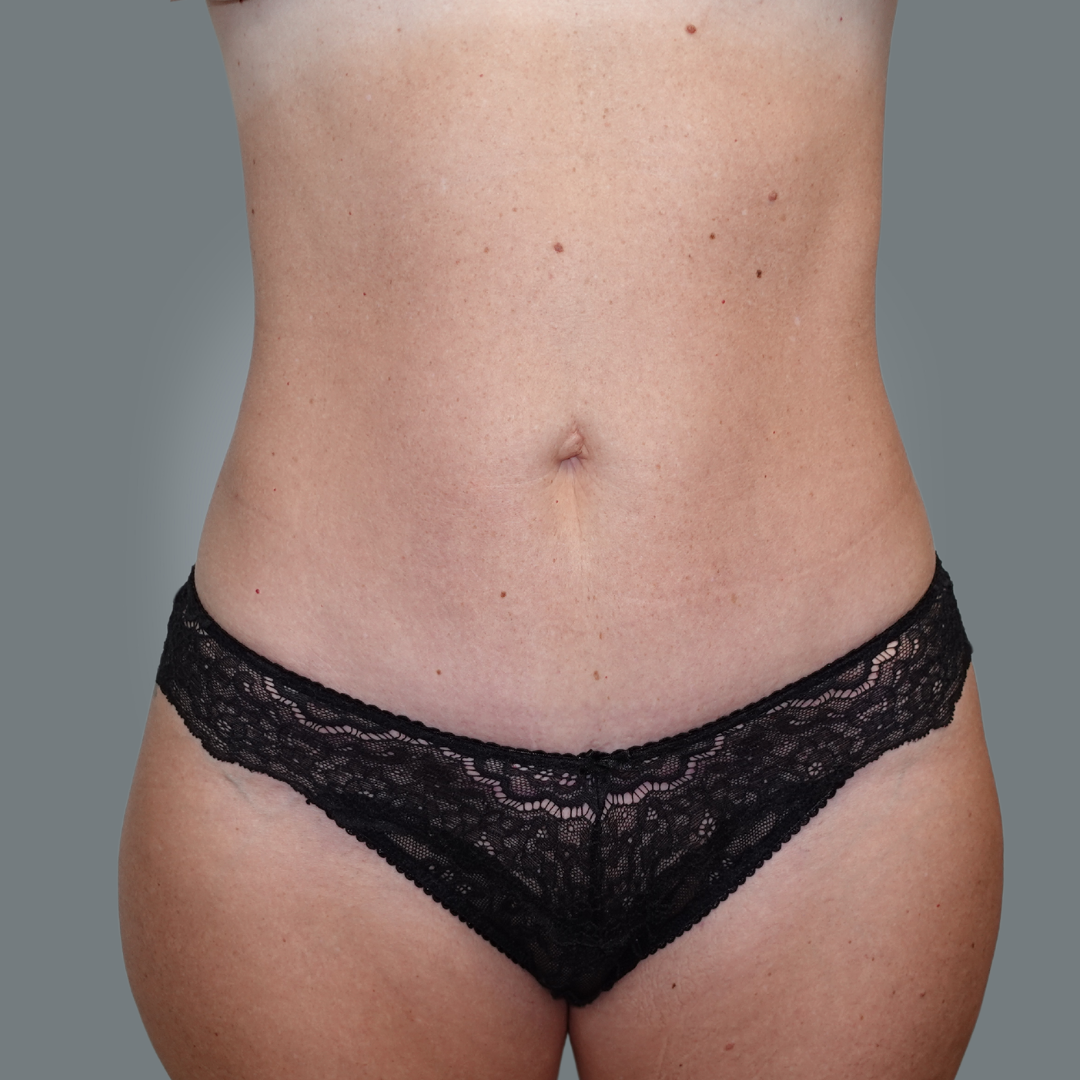
Mini Abdominoplasty Before and After
Before-and-after photographs are especially useful for understanding what a mini procedure can realistically change. The strongest examples are patients whose concerns are concentrated below the belly button and whose upper abdomen already has relatively good contour.
Frequently Asked Questions
What is the difference between a mini tummy tuck and a full tummy tuck?
A mini tummy tuck focuses on selected concerns below the belly button and usually does not require an incision around the belly button. A full abdominoplasty treats a broader area and is usually more appropriate when loose skin or abdominal-wall laxity extends into the upper abdomen.
Can a mini tummy tuck tighten separated abdominal muscles?
It can tighten the lower abdominal wall when the area that needs repair can be reached through the limited lower-abdominal approach. More extensive muscle separation may require a full abdominoplasty.
Does a mini tummy tuck treat loose skin above the belly button?
Not effectively. Significant loose skin or fullness above the belly button is one of the main reasons Dr. Ho may recommend a full abdominoplasty instead.
Will I have a scar around my belly button?
Usually not. A mini abdominoplasty generally leaves a low horizontal lower-abdominal scar without the circumferential belly-button scar used in a full tummy tuck. The belly button may sit slightly lower after the lower abdominal skin is tightened.
Can mini abdominoplasty be combined with liposuction?
Yes, in selected patients. Liposuction can reduce localized fat around the abdomen, waist, or flanks, while mini abdominoplasty addresses limited loose skin and lower-abdominal wall laxity.
How long is recovery after a mini tummy tuck?
Many patients make substantial progress during the first 2–4 weeks, but the time needed away from work and major commitments depends on the job, the extent of surgery, and whether other procedures were performed. Dr. Ho will give you a personalized activity plan.
Will I need drains?
Temporary drains may be used depending on the surgical plan. If they are placed, you will receive instructions for drain care and they are removed during early follow-up when appropriate.
Considering Mini Abdominoplasty?
A consultation is the best way to determine whether the changes you want to address are limited enough for a mini procedure or whether a full abdominoplasty would give you a more complete result. Dr. Ho will assess your skin, abdominal wall, fat distribution, scars, health, and goals and explain the options that fit your anatomy.
Medically reviewed by Dr. Adelyn Ho, MD, MPH, FRCSC | Plastic and Reconstructive Surgeon | Last reviewed: August 2026
