

FACE PROCEDURES

Earlobe Reduction in Vancouver

Earlobes vary naturally in size and shape. Some people have always had larger or longer earlobes, while others notice that the lobes become more elongated, thinner or more wrinkled with age. Heavy earrings can also contribute to stretching over time. Earlobe reduction is a small surgical procedure that shortens and reshapes an intact earlobe. The goal is not to create a standard earlobe size, but to make the lobule more proportionate to the rest of the ear while preserving a natural shape and transition to the cheek.

If you are trying to decide whether your concern is best treated with reduction or with repair of a torn or stretched piercing, I will assess the earlobe itself, your piercing history and the amount of tissue that needs to be changed.
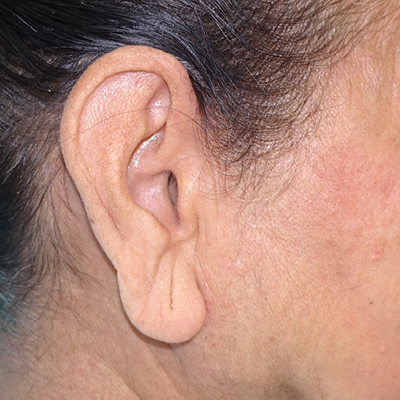
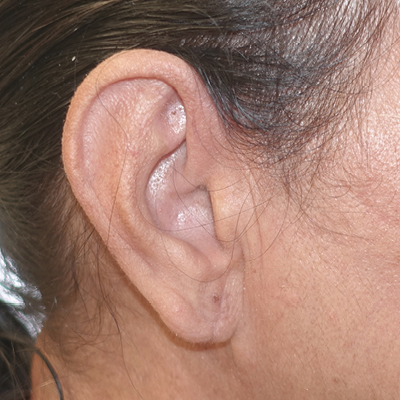
What Is Earlobe Reduction?

Earlobe reduction removes a carefully planned amount of skin and soft tissue from the lower part of the ear, also called the lobule. It can shorten a long or pendulous earlobe, reduce excess width, improve asymmetry, or refine an earlobe that feels out of proportion with the rest of the ear.

This is different from otoplasty or ear pinning. Earlobe reduction changes the soft-tissue earlobe rather than the cartilage that determines how far the ear projects from the head. It does not affect hearing.

When Is Earlobe Reduction a Good Option?

Earlobe reduction may be appropriate when the earlobes are naturally large or elongated, have lengthened with age, or when one earlobe is noticeably larger or longer than the other. Some patients are mainly bothered by how the ears look with their hair pulled back or by the way earrings draw attention to the lobes.

The tradeoff is a permanent scar. I also look at skin quality, natural asymmetry, previous piercings, your scar history and how much change you want before deciding how much tissue can be safely removed.

Earlobe Reduction vs Earlobe Repair

Earlobe reduction and earlobe repair solve different problems. Reduction is used when the earlobe is intact but larger or longer than desired. Earlobe repair or reconstruction is used for a split lobe, a stretched piercing hole, a gauge-related defect, trauma or missing tissue.

Sometimes the distinction is obvious and sometimes it is not. A stretched piercing can sit within an otherwise elongated earlobe, for example, and the surgical plan may need to address both concerns. If the main problem is a torn or stretched piercing, see the Earlobe Repair & Reconstruction page for more detail.

How I Plan Earlobe Reduction

There is no single ideal earlobe measurement. I compare both ears and look at the earlobe length, width, attachment to the cheek, skin thickness and elasticity, existing piercings and natural asymmetry. The amount of reduction is planned around those features rather than using one standard template.

One Earlobe or Both

Both earlobes can be reduced when the goal is to change overall proportion. One side can also be treated when asymmetry is the main concern. Even when both sides are treated, they are marked individually because the ears are rarely perfectly identical before surgery.

Incision Placement and Piercings

The incision is commonly placed in the natural crease where the earlobe meets the cheek. Depending on the shape of the lobule, the quality of the skin and the amount of tissue being removed, another incision pattern or an additional incision may be needed to create a smoother contour.

Existing piercings are part of the planning. A piercing may be preserved when its position is compatible with the reduction. If it lies within the tissue being removed, is stretched, or would compromise the new contour, it may need to be closed or repositioned and re-pierced after healing.

What Happens During Earlobe Reduction?

Earlobe reduction is performed in the clinic under local anesthetic and usually takes approximately 30 to 60 minutes, depending on whether one or both earlobes are treated and how much reshaping is required. You remain awake and may notice movement or pressure, but you should not feel sharp pain during the procedure.

After the earlobes are marked, a measured amount of skin and soft tissue is removed. The remaining tissue is reshaped to create a shorter, more proportionate lower border. I use dissolvable sutures on the back of the earlobe and non-absorbable sutures on the front. Polysporin and a small dressing are applied at the end of the procedure.

What Is Recovery Like After Earlobe Reduction?

Keep the incision dry for the first 24 hours. Mild swelling, redness, tenderness and a small amount of bleeding can occur during the early healing period. Placing a clean towel over the pillow can be useful for the first few nights. A thin layer of Polysporin is applied daily until the front sutures are removed.

The front sutures are generally removed at approximately seven days. Many patients can return to desk work or other non-strenuous activities within a few days. Heavy exercise should be avoided until the sutures are removed and the incisions are healing appropriately.

Be careful with anything that may catch or press on the earlobes while they are healing, including clothing, hairbrushes, headphones, phones and earrings.

What Will the Scar Look Like?

Earlobe reduction leaves a permanent scar. When the anatomy allows, the incision is placed near the crease between the earlobe and cheek, although the exact scar depends on the earlobe shape and the amount of reduction required.

The incision is usually red and can feel firm during the early healing period. Scar massage generally begins around two to three weeks after surgery once the incision is closed. Silicone scar tape or gel may also be used during early scar maturation. The scar continues to soften and fade over many months, and its final appearance is not judged in the first few weeks.

If you have a personal history of thick scars or keloids, this is important to discuss before surgery because earlobe surgery creates a new scar.

Earlobe Reduction Before & After Photos

Before-and-after photographs are useful for understanding the type of change earlobe reduction can create, particularly for naturally long or pendulous earlobes and age-related elongation. They also show why the surgical plan needs to be individualized rather than based on one target size.

The gallery includes both earlobe reduction and earlobe repair cases. When reviewing the photographs, look at whether the patient had an intact enlarged earlobe or a torn or stretched piercing, because those are different operations.

View Earlobe Reduction & Repair Before & After Photos

Risks and Limitations

Earlobe reduction is a focused office procedure, but it still involves surgery and a permanent scar. Potential risks include bleeding or hematoma, infection, delayed wound healing, wound separation, numbness or altered sensation, asymmetry, contour irregularity, notching, thick or raised scarring, keloid formation, under- or over-reduction, changes to an existing piercing and the possibility of revision.

Perfect symmetry cannot be guaranteed. The ears also continue to age, and repeated tension from heavy earrings can stretch the tissue over time.

Earlobe Reduction FAQs

Yes. I perform earlobe reduction under local anesthetic in the clinic. You remain awake during the procedure.

The procedure usually takes approximately 30 to 60 minutes, depending on whether one or both earlobes are treated and the amount of reshaping required.

The early healing period is approximately one week, with the front sutures generally removed at about seven days. Many patients return to non-strenuous work within a few days. Heavy exercise is avoided until the sutures are removed and the incision is healing appropriately.

Sometimes. It depends on where the piercing sits relative to the tissue being removed and the new earlobe contour. A stretched or poorly positioned piercing may need to be closed or repositioned.

Earrings should be avoided during early healing. The timing depends on whether the original piercing was preserved, closed or later re-created. I will give you specific guidance based on how the earlobe has healed.

The cost depends on whether one or both earlobes are treated and whether the surgery involves straightforward reduction or additional repair or reconstruction. A personalized quote is provided after consultation.

The tissue that is removed does not grow back, so the reduction is intended to be long-lasting. The earlobes can still change with aging and repeated tension from heavy earrings.

Considering Earlobe Reduction in Vancouver?

If you are bothered by earlobes that feel too large, long or asymmetric, consultation is an opportunity to decide whether reduction is the right operation, review the location of the scar and any existing piercings, and discuss how much change is realistic for your anatomy.

Prefer to contact us directly?
604-806-3650 | info@dradelynho.com

Medically reviewed by Dr. Adelyn Ho, MD, MPH, FRCSC | Plastic and Reconstructive Surgeon | Last reviewed: August 2026