FACE PROCEDURES

Earlobe Repair & Reconstruction in Vancouver

Earlobes can gradually stretch from the weight of earrings, split after an earring is pulled through the ear, or remain enlarged after gauges or plugs are removed. Earlobe repair and reconstruction reshape damaged or stretched soft tissue to restore a more natural earlobe contour.

Dr. Adelyn Ho performs earlobe repair in Vancouver under local anaesthetic. The repair is individualized to the type of tear or stretching, the amount of healthy tissue available, the natural shape of the earlobe, existing scar tissue and your goals for wearing earrings in the future.

Procedure Overview

Treatment settingOffice-based minor surgical procedure
AnaestheticLocal anaesthetic
Repair typeDirect repair for many split or elongated piercing holes; more complex tissue rearrangement may be required for significantly stretched or gauged earlobes
SuturesDissolvable sutures may be used on the back of the earlobe and non-absorbable sutures on the front when appropriate. Front sutures are usually removed at approximately 7 days.
Initial aftercareKeep the incision dry for the first 24 hours. Polysporin is generally applied until front sutures are removed.
ExerciseHeavy exercise is avoided until the front sutures are removed and the incision is healing well.
ScarringA permanent scar remains. Redness and firmness gradually improve as the scar matures over the following months.
Re-piercingOften possible after healing, but timing and placement are individualized and the new piercing should be planned away from the repair scar.
CostSimple earlobe repair for an elongated or stretched piercing starts at $900 for one earlobe and $1,800 for both earlobes. Reconstruction of a gauged earlobe starts at $1,500 for one earlobe and $2,800 for both earlobes. A personalized quote is provided after assessment

What Is Earlobe Repair & Reconstruction?

Earlobe repair, sometimes called lobuloplasty, is a surgical procedure used to repair tissue that has been torn, split, stretched or enlarged by a piercing or gauge. The goal is not simply to close a hole. The repair also needs to recreate a smooth earlobe edge and preserve as much healthy tissue as possible.

The incision pattern depends on the problem being treated. A simple split from an earring may require only a small amount of skin removal and a direct repair, while a significantly stretched or gauged earlobe may require more complex reconstruction with a different scar pattern and final contour.

What Types of Earlobe Damage Can Be Repaired?

Split or Torn Earlobe

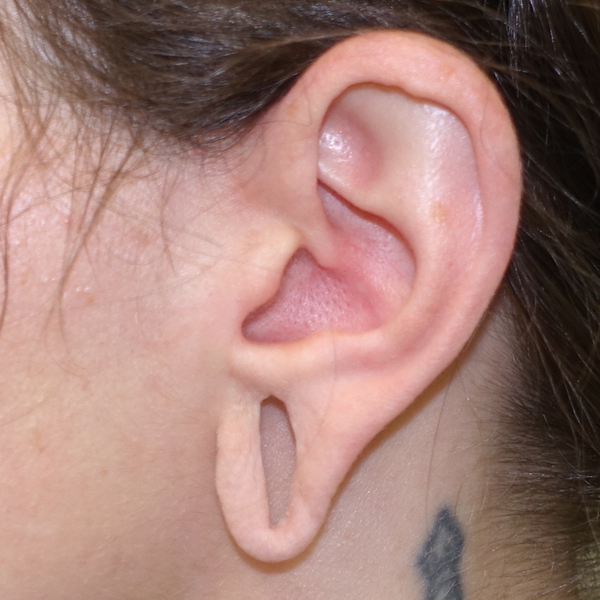
A piercing hole can gradually lengthen from the weight of earrings until only a thin bridge of tissue remains. The earlobe can also tear suddenly if an earring, particularly a hoop or dangling earring, is caught and pulled through the tissue. Both partial and complete tears can be assessed for surgical repair.

Stretched Piercing Hole

Heavy jewelry and repeated traction can enlarge an earring hole even when the earlobe has not completely split. When the stretched opening no longer returns to its previous size, the scarred piercing tract can be removed and the remaining tissue repaired.

Gauged or Stretched Earlobe

Ear stretching, also called gauging, gradually enlarges a pierced opening so that plugs or gauges can be worn. After the jewelry is removed, a significantly stretched earlobe may not shrink back enough on its own. Reconstruction can remove or rearrange excess stretched tissue to create a smaller, more anatomic earlobe contour. The repair is usually more complex than a straightforward split earlobe.

Earlobe Repair vs Earlobe Reduction vs Ear Keloid Treatment

Earlobe repair and earlobe reduction address different problems. Earlobe repair reconstructs tissue that has been damaged by a tear, stretched piercing, trauma or gauging. Earlobe reduction is intended for an earlobe that is naturally large or elongated, or has become larger with time, without a primary tear.

A raised scar or growing mass around an ear piercing may represent a keloid rather than a stretched piercing hole. Keloids require a different treatment plan because recurrence and scar control are central to treatment.

Is Earlobe Repair Right for You?

Earlobe repair may be appropriate ifAnother approach or further assessment may be more appropriate if
You have a partial or complete split, elongated piercing hole, or residual stretched tissue after plugs or gauges.There is active infection, drainage or an acute injury that should be treated first.
The tissue is healed enough for elective repair.Your main concern is a naturally large or elongated earlobe without a tear, in which case earlobe reduction may be the better discussion.
You understand that surgery replaces the defect with a permanent scar.A raised or enlarging scar around a piercing suggests a keloid rather than a simple tear or stretched opening.
You have realistic expectations about contour improvement and natural asymmetry.You expect a scar-free result or perfectly identical earlobes.
You can protect the repair from traction and follow wound-care and suture-removal instructions.A medical or wound-healing issue should be optimized before elective surgery.

During consultation, Dr. Ho will assess the amount and quality of remaining tissue, previous scars or repairs, natural asymmetry between the ears and what you would like the earlobe to look like afterward.

How Is Earlobe Repair Performed?

Earlobe repair and reconstruction are performed under local anaesthetic. You may feel movement or light pressure during the procedure, but the surgical area should be numb while the repair is carried out.

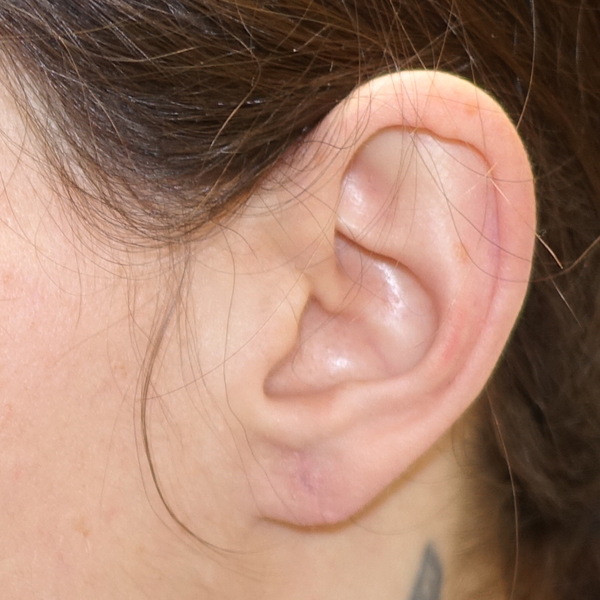
For a split earlobe caused by an earring, Dr. Ho removes a minimal amount of skin from the damaged edges so that healthy tissue can be brought together. This commonly results in a straight-line scar and a contour that is similar to the earlobe before it was torn.

For an earlobe that has been significantly stretched with a plug or gauge, more tissue may need to be reshaped. The incision and scar pattern vary according to how much tissue has stretched and the contour that can safely be recreated.

The earlobe is closed with dissolvable sutures at the back and non-absorbable sutures on the front when appropriate. The front sutures are usually removed at approximately 7 days. Polysporin and a small dressing are placed immediately after the procedure.

Earlobe Repair Recovery and Scar Care

The First 24 Hours and First Week

Keep the incision dry for the first 24 hours. A small amount of bleeding can occur during the first few days, so placing a towel over your pillow can be helpful. Mild swelling and discomfort are expected and can usually be managed with Tylenol or Advil if these medications are appropriate for you.

Apply a thin layer of Polysporin to the incision each day until the front sutures are removed. Heavy exercise should be avoided until the sutures are out and the incision is healing well.

Scar Maturation

The incision will often look red after the sutures are removed. Swelling and redness gradually settle, and the scar continues to change over many months. Scar massage is generally started around 2 to 3 weeks, once the incision has healed enough for massage. Silicone scar tape or gel can also be used during early scar maturation when appropriate. Dr. Ho will advise when to begin scar care based on how the incision is healing.

Re-Piercing After Earlobe Repair

Re-piercing is often possible after earlobe repair, but the timing and placement should be individualized. The repaired tissue needs time to regain strength, and a new piercing is generally planned away from the repair scar rather than directly through weakened scar tissue. Dr. Ho will advise when the earlobe is ready based on the type of repair and your healing.


Risks and Possible Complications

Earlobe repair is a focused office procedure, but it still creates a surgical wound and a permanent scar. Potential risks include hematoma or bleeding, infection, delayed wound healing, poor or thick scarring, numbness or altered sensation, asymmetry, contour irregularity and notching of the earlobe edge.

The repaired earlobe can also stretch or tear again if it is exposed to future traction or heavy jewelry. Dr. Ho will review the risks that are most relevant to your anatomy and repair plan before surgery.

Earlobe Repair Before and After Photos

Before-and-after photographs can be particularly helpful because split, stretched and gauged earlobes require different repairs and leave different scar patterns. You can view Dr. Ho’s Earlobe Repair, Reduction & Reconstruction Before & After Gallery to see examples of real patient results at different stages of healing.

Every earlobe, repair and scar heals differently, so photographs are useful for understanding the range of possible outcomes rather than predicting an exact result.

Earlobe Repair Cost in Vancouver

The cost of earlobe repair depends on the type of repair, whether one or both earlobes are treated and whether the reconstruction is straightforward or more complex. A split earlobe may require a different surgical plan than a significantly stretched or gauged earlobe.

A personalized quote can be provided after Dr. Ho has assessed the earlobe and the expected reconstruction is clear.

Earlobe Repair with Dr. Adelyn Ho

Dr. Adelyn Ho, MD, MPH, FRCSC is a plastic and reconstructive surgeon practising in Vancouver. Her approach to earlobe repair combines careful tissue handling, individualized scar placement and practical follow-up through suture removal and scar care.

Consultation is an opportunity to assess the type of damage, discuss the expected scar and contour, review future earring goals and determine whether a straightforward repair or more complex reconstruction is appropriate.

Frequently Asked Questions About Earlobe Repair

Earlobe repair reconstructs tissue damaged by a tear, stretched piercing, trauma or gauging. Earlobe reduction removes a planned amount of otherwise intact tissue to make a naturally large or elongated earlobe smaller.

Yes. An elongated piercing hole does not need to become a complete split before it is assessed for repair. The stretched tract can be removed and the remaining tissue repaired before further tearing occurs.

Yes. When a gauged earlobe does not shrink sufficiently after the plug or gauge is removed, reconstruction can remove or rearrange stretched tissue to create a smaller lobe. The incision and final contour are more complex than a simple split repair.

Yes. Any surgical repair leaves a permanent scar. A simple split commonly leaves a fine straight-line scar, while a stretched or gauged earlobe may require a more complex scar pattern. The scar is often red initially and continues to mature over the following months.

The first week is focused on protecting the repair and caring for the incision. Dr. Ho usually removes the front sutures at approximately 7 days. Heavy exercise is avoided until the sutures are removed. Redness and scar maturation continue for much longer than the initial recovery period.

Re-piercing should wait until the repaired tissue has regained adequate strength. Timing varies with the type of repair and healing. Dr. Ho will advise when re-piercing is appropriate and where the new piercing should be placed.

The fee depends on the type of repair, whether one or both earlobes are treated and whether the reconstruction is straightforward or more complex. A personalized quote can be provided after Dr. Ho has assessed the earlobe.

Yes. A repaired earlobe can be injured again, particularly after new trauma or repeated traction from heavy jewelry. Protecting the healed repair and planning any future piercing carefully can reduce unnecessary stress on the tissue.

Considering Earlobe Repair in Vancouver?

If you have a split earlobe, stretched piercing hole or residual stretched tissue after gauges, consultation can help clarify what type of repair is possible, where the scar is likely to sit and what recovery and future re-piercing may involve.

Prefer to contact us directly?
604-806-3650 | info@dradelynho.com

Medically reviewed by Dr. Adelyn Ho, MD, MPH, FRCSC | Plastic and Reconstructive Surgeon | Last reviewed: August 2026