

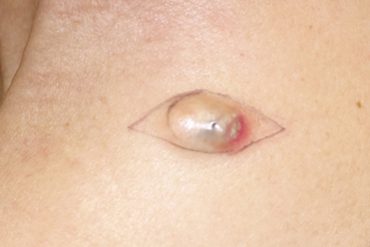
Cyst Removal Recovery: What Should You Expect?
Cyst removal is usually a relatively small surgical procedure, but the incision still needs time to heal. Recovery depends on where the cyst was located, how large or inflamed it was, the type of closure used and the amount of tension placed on the area during daily activities. Most patients are able to return to normal light activities fairly quickly, but wound care and activity restrictions matter because the goal is to allow the incision to heal without unnecessary pulling, rubbing or irritation.
The First Few Days
Mild tenderness, swelling, bruising or a small amount of spotting around the incision can occur during the first few days and generally improves as healing progresses. You will receive specific instructions for dressing and wound care, which may include keeping the area clean, protecting the incision and applying a topical ointment if recommended. Once the local anesthetic wears off, some discomfort is normal and can usually be managed with Advil and Tylenol.
When Are Stitches Removed After Cyst Removal?
There is no single suture schedule for every cyst. The type of stitches and when they are removed depend on the treatment area and how much tension is placed on the incision. In Dr. Ho’s practice, external sutures on the face are typically removed at approximately five to seven days. Body incisions with external sutures are removed at 10-14 days. Closures with absorbable sutures will not require suture removal. Scalp cysts are often treated differently, and absorbable scalp sutures may gradually loosen and fall out over approximately two to three weeks. Your individual instructions should always take priority over a general timeline.
When Can I Exercise After Cyst Removal?
Heavy exercise is generally avoided for approximately one week after an uncomplicated cyst excision. The main reason is to reduce pulling and tension across the healing incision, and to limit elevated heart rate and blood pressure which can lead to more swelling and bleeding. The exact restriction depends on location. An incision on the back, shoulder, chest or an area repeatedly stretched during exercise may require more caution than an incision in a less mobile area. Walking and normal light daily activity are usually easier to resume, but activities that rub, pull or repeatedly stretch the wound should wait until the incision is secure.
What About Scalp Cyst Recovery?
Scalp incisions can behave differently because the skin is thicker and the wound sits among hair follicles. Patients may need specific instructions about hair washing, brushing, helmets and other activities that place pressure on the area. Absorbable scalp sutures may remain noticeable for a couple of weeks before they gradually loosen or fall out.
When Will the Scar Settle?
The incision is usually more visible early in healing. It may initially look pink, firm or slightly raised and then gradually mature over the following months. Scar appearance depends on the cyst location, skin tension, previous inflammation or infection, individual healing and whether the area is repeatedly stretched or exposed to the sun. Cyst removal cannot be scarless. The goal is a well-planned incision and closure followed by appropriate scar care as the wound matures.
What Should I Avoid After Cyst Removal?
The most useful rule is to avoid activities that place unnecessary tension, friction or pressure across the incision while it is healing. Follow the specific instructions you were given for wound care, bathing, exercise, dressings, sutures and scar management, because these vary depending on where the cyst was removed.
If you are considering cyst removal, you can learn more about cyst removal in Vancouver, including the different types of cysts, how removal is performed, recovery, scarring and cost. If you are unsure whether the lump you have is a cyst or whether removal is appropriate, I would be happy to assess it and discuss your options with you in consultation.
Written and medically reviewed by Dr. Adelyn Ho, MD, MPH, FRCSC
Plastic and Reconstructive Surgeon
Last reviewed: August 2026
